
Precision cutting motor saw blade selection guide: YSA technical analysis and practical advice
In modern industrial manufacturing, precision cutting is a key link to achieve high-quality machining. As the core power source, the performance of the cutting motor directly determines the cutting efficiency and accuracy. As an executive part that directly contacts the workpiece, the choice of the type of the saw blade is the decisive factor affecting the final processing effect. This article will focus on the YSA cutting motor technology and explore in depth how to scientifically select the type of saw blade to achieve efficient and accurate cutting operations.
The importance of cutting motors and spindle cutting systems
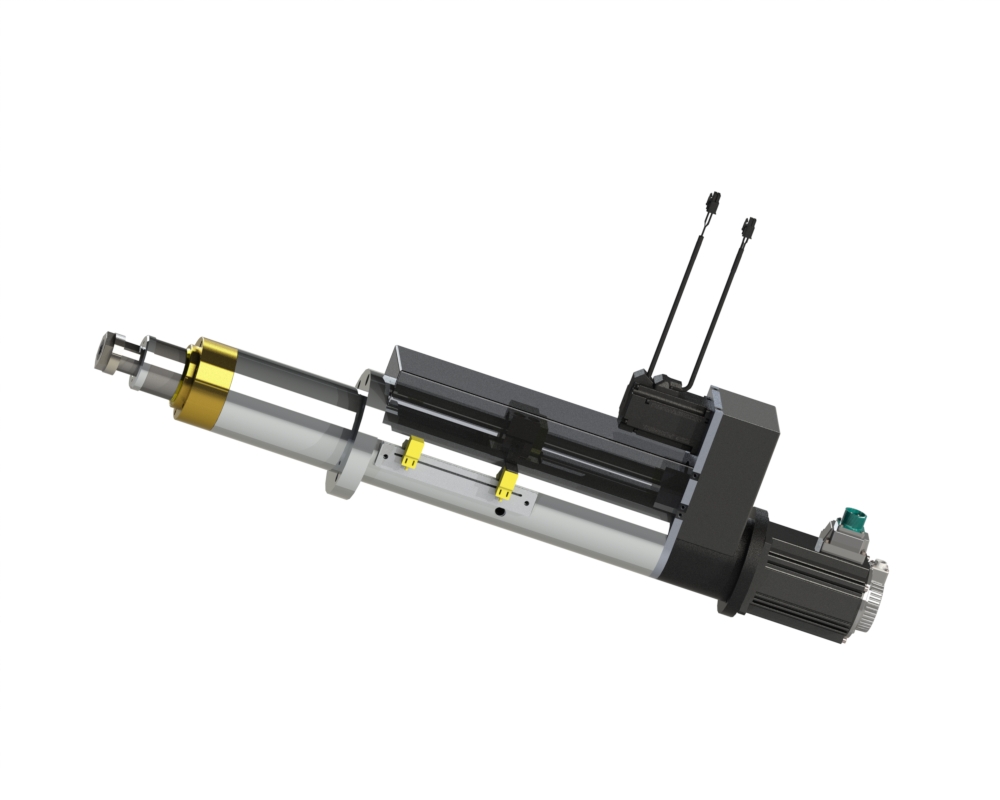
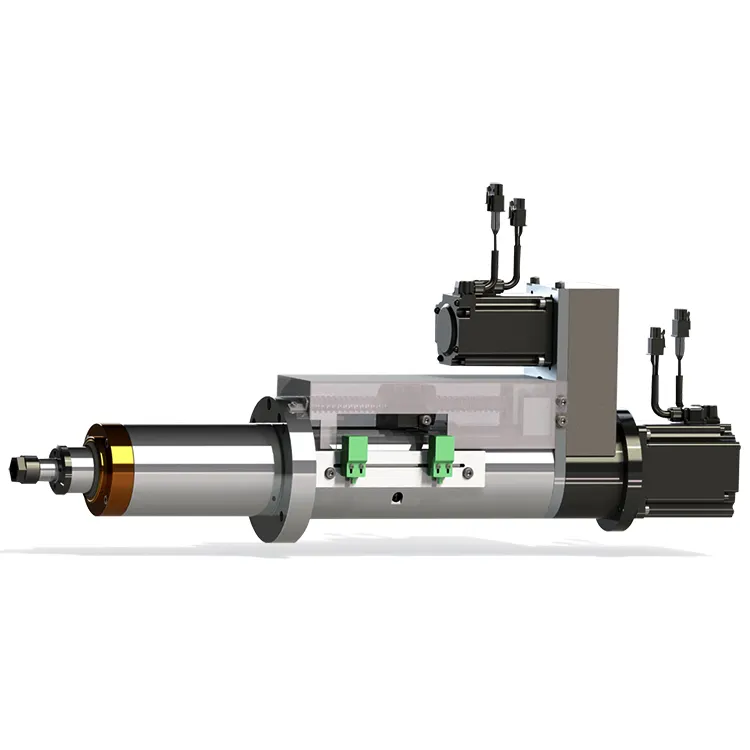
The cutting motor, especially the high-speed spindle cutting system, is the heart of modern precision machining equipment. It drives the saw blade through high-speed rotation to perform operations such as cutting, milling, drilling, etc. on the material. An excellent cutting spindle head should have high speed, large torque, low vibration and excellent dynamic balance characteristics. As a well-known brand in the industry, YSA's cutting motor products have outstanding performance in terms of precision, stability and service life. They are widely used in the processing of aluminum, steel, wood, plastic, ceramics and other materials.
YSA's cutting motor uses a high-strength brushed alloy aluminum body and imported SKF angular contact bearings to ensure temperature rise control (usually no more than 48 ° C) and low-noise operation (less than 38 decibels at 0.5 meters) under high-speed operation. Its strict assembly process makes the motor's radial and axial run-out coefficients less than 0.01%, providing a reliable guarantee for precision cutting.
Analysis of technical parameters of YSA cutting motor
Taking the YSA-H718 model as an example, the motor power range covers 2.2kw to 11kw and can rotate up to 3000-18000 rpm. It is suitable for a wide range of cutting needs from steel and castings to aluminum, wood, marble, glass, ceramic and plastic sheet pipes. For higher precision applications, such as board splitting, professional spindle speeds can reach 5000-60000 rpm and torque up to 4.5Ncm. It can achieve micron-level cutting accuracy.
III. Core elements of blade type selection
Number of teeth selection
: The number of teeth is the primary factor affecting the quality and speed of cutting. The fewer the number of teeth (such as 18-24 teeth), the faster the cutting speed, but the surface is rougher, suitable for rough machining such as longitudinal cutting of solid wood; the number of teeth is moderate (40-60 teeth) Good balance, suitable for general wood and plywood cutting; the number of teeth (more than 80 teeth) can achieve ultra-smooth cutting, suitable for fine woodworking, laminate and other materials. For aluminum cutting, the tooth spacing is usually kept at 15-25mm.Tooth design
Different tooth shapes are suitable for different materials and cutting methods.Flat Top Grinding Type (FTG)
Tooth tip is square, suitable for cutting wood quickly along the grain.Alternating top oblique grinding type (ATB)
The serrated teeth are alternately tilted left and right, and the effect is smooth when cutting wood fibers. It is a multi-functional choice for general woodworking.Three-tip grinding type (TCG)
: Alternate flat top and trapezoidal teeth for good durability when cutting laminates, plastics and non-ferrous metals.ladder tooth
The combination of trapezoidal teeth and flat teeth makes the cutting smooth and is widely used in the cutting and horizontal sawing of industrial aluminum profiles and aluminum alloy radiators.
Saw blade material
:cemented carbide
Combining economy with long-lasting sharpness, it is often used in wood and composites.High Speed Steel (HSS)
: Suitable for light-duty work with softwood and non-hard materials.Diamond Coating (PCD)
Extremely long wear-resistant life, especially suitable for melamine board, acrylic board, PVC board and composite materials, can effectively prevent bursting and melting edge.
Diameter and thickness
: The diameter of the saw blade needs to match the thickness of the cutting equipment and workpiece. The larger the diameter, the higher the cutting capacity is usually. In terms of thickness, the thinner the better in theory (reduce material consumption), but the work stability needs to be taken into account. For aluminum profile cutting, too thin saw blades are easy to shake, which affects the cutting effect.
IV. Material-based saw blade selection recommendations
Aluminum and non-ferrous metals
It is recommended to use alloy saw blades with TCG tooth shape, with a tooth number of 60-80, and a standard saw edge is selected. For high-speed aluminum cutting motors, alloy saw blades have better effect. The number of teeth should be reasonably selected according to whether the workpiece is solid or hollow.Wood and wood-based panels
Saw blades with FTG teeth and about 24 teeth are used for solid wood longitudinal cutting; ATB or Hi-ATB teeth and 40-100 teeth are used for cross cutting or plywood cutting; Hi-ATB teeth with more than 80 teeth are used for fine processing.Plastics and laminates
Select a fine arrangement of TCG toothed saw blades, with a tooth count of 60-80 and a thin saw mouth, which can minimize melting and edge collapse.Precision electronic materials (e.g. PCBs)
It is necessary to choose an anti-static spindle with ultra-high speed (e.g. 60,000 rpm) and a special saw blade to ensure that there is no static damage during the cutting process, and the incision is smooth and burr-free.
V. conclusion
Selecting the right cutting motor saw blade is a systematic project that requires comprehensive consideration of cutting motor performance (such as the stable high-precision spindle provided by YSA Italy), processing material characteristics, cutting quality requirements, and cost-effectiveness. By scientifically matching YSA Italy's high-performance cutting spindle head with the targeted selection of saw blades, the efficiency and quality of precision cutting can be significantly improved, the service life of the equipment can be extended, and finally the production goal of cost reduction and efficiency can be achieved. In practical applications, it is recommended to test and adjust according to specific machining tasks to find the optimal tool solution.
 How to Select the Right YSA Servo Spindle for Your CNC Autom
  YSA BD03 High-Precision Dual Servo Drilling and Tapping Sp
  How to Properly Choose Drill Bits for Drilling Operations wi
  Detailed Explanation of Main Control Modes for Tapping Spin